January 13, 2026

Written by
selinyildiz8788@gmail.com
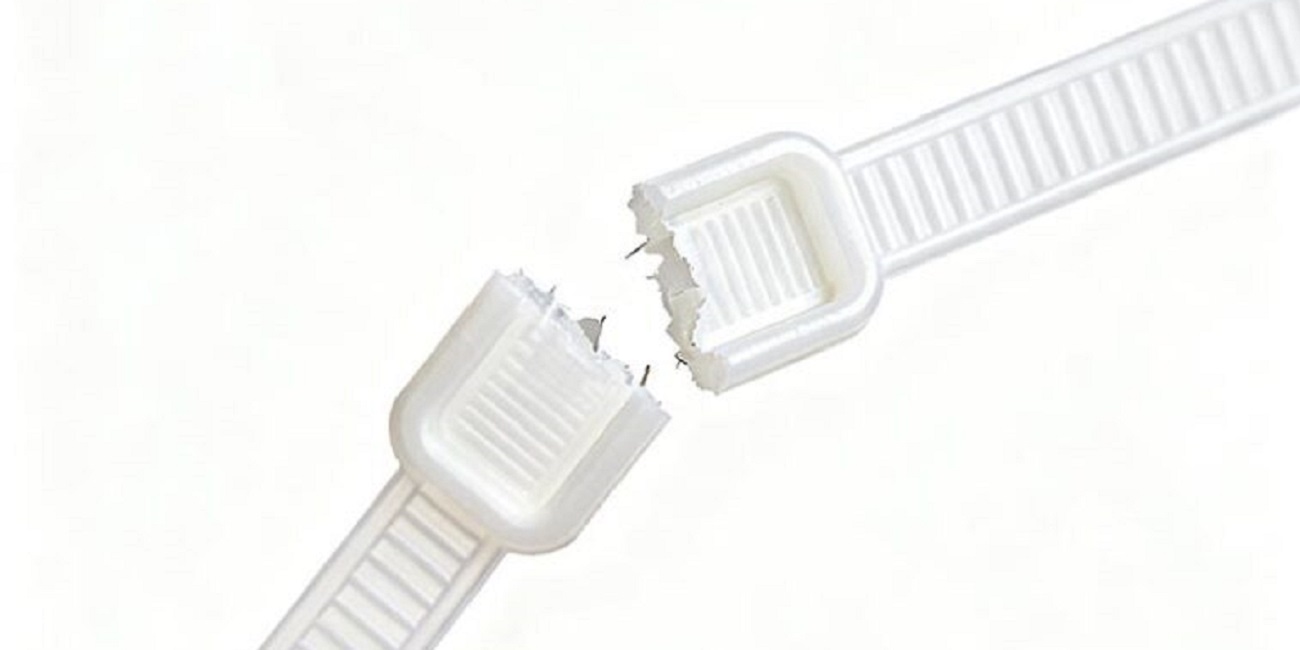
1. BRITTLENESS AND EASY BREAKAGE
POOR RAW MATERIAL QUALITY
- Excessive impurity content: Cable ties are typically made of PA6 or PA66. Using low-quality nylon raw materials with high recycled content or excessive impurities will affect their molecular structure and performance.
- Insufficient drying of raw materials before delivery: Moisture in the material temporarily acts as a plasticizer, leading to inaccurate testing of raw material performance.
DEFECTS IN PRODUCTION PROCESS
- Improper injection molding temperature: Excessively high temperatures (PA6 > 240℃; PA66 > 280℃) cause thermal degradation of nylon, resulting in molecular chain breakage and reduced toughness of cable ties. Conversely, excessively low temperatures lead to poor material fluidity, causing internal defects such as air bubbles and porosity, which also weaken breaking strength.
- Insufficient holding pressure: Inadequate holding pressure during molding results in uneven internal density of cable ties, affecting their strength.
AGING OR ENVIRONMENTAL FACTORS
Long-term UV exposure causes nylon molecular chain breakage; high temperatures accelerate molecular movement and oxidation reactions; humid environments may lead to nylon water absorption and swelling, damaging its internal structure. The glass transition temperature (Tg) of PA6 is approximately 45℃, and PA66 is about 50℃. Below 0℃, the material becomes hard and brittle, losing impact resistance.
2. EXCESSIVE DIMENSIONAL DEVIATION
- Mold design and manufacturing errors
- Undersized or oversized mold cavities directly cause deviations in cable tie dimensions such as width and thickness.
- Improper shrinkage rate control: Failure to accurately grasp or effectively control the shrinkage rate of the nylon material used during production results in dimensional discrepancies between the molded cable ties and the design specifications.
- Unstable injection molding pressure: Insufficient injection pressure leads to incomplete filling of mold cavities, resulting in poorly formed or rough-surfaced locking teeth.
3. INSUFFICIENT LOCKING FORCE
Cable ties may slip, loosen, or fail to lock after binding due to the following reasons:
- Unreasonable tooth profile design: Poorly designed tooth profiles result in inadequate meshing between teeth, leading to slippage and compromised self-locking performance.
- Excessive gap at the lock head: Mold dimensional deviations cause an excessive gap between the lock head and the strap.
- Material hardness issues: Excessively high hardness leads to brittle fracture of teeth under stress; excessively low hardness causes tooth deformation, preventing tight meshing with the strap and affecting self-locking effectiveness.
4. SURFACE DEFECTS
- Mold surface conditions: Scratches, wear, rust, or other defects on the mold surface are replicated on the cable tie surface during injection molding. Improper use of mold release agents also causes surface blemishes.
- Poor raw material fluidity: Inadequate fluidity results in incomplete filling of mold cavities, leading to surface defects such as flow marks and ripples.
- Injection molding process parameters: Excessively high injection speed causes turbulent flow of material in the mold, forming rough surfaces; insufficient injection pressure leads to surface depressions and voids; excessively low injection temperature reduces material fluidity, negatively impacting surface quality.
- Raw material contamination: Mixing with other plastics causes discoloration of finished cable ties. Insufficient drying of raw materials or air trapped in the mold results in bubbles.